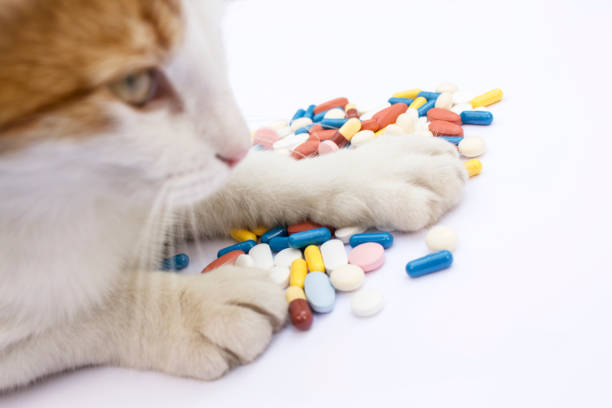
The Ultimate Guide to Easily Giving Medication to Cats
Understanding Feline Behavior and Medication Resistance
Administering medication to a cat can often feel like a high-stakes battle of wills. To successfully treat your feline friend, it is crucial to understand the underlying reasons behind their fierce resistance. Cats are highly sensitive, predatory creatures that rely heavily on their acute senses of smell and taste to navigate the world and avoid toxins. When a foreign, bitter substance is introduced, their natural survival instincts trigger an immediate defensive response.
The Role of Scent and Taste
A cat’s olfactory system is significantly more advanced than a human’s. If a pill or liquid smells like synthetic chemicals, a cat will instinctively reject it. Furthermore, cats possess highly specialized taste buds that are extremely sensitive to bitter flavors—a common trait in many veterinary medications. Understanding this biological barrier is the first step in rethinking how we approach medication time.
Stress Triggers and Restraint
Beyond taste and smell, the physical act of being restrained is a massive stress trigger for cats. Forced restraint eliminates their ability to flee, causing panic and leading to scratching or biting. By shifting your approach from “forcing” to “cooperating,” you can significantly reduce anxiety for both you and your pet.

Step-by-Step Guide to Administering Cat Pills
Pills are the most common form of feline medication, but they are also the most notoriously difficult to administer. Mastering the physical technique and utilizing clever concealment strategies can make this process seamless.
The Hidden Pill Technique
The easiest method is to hide the pill in a high-value food. Moldable pill pockets, a small dab of cream cheese, or a piece of plain cooked chicken can mask both the scent and the texture of the medication. The key is to offer a non-medicated treat first, followed by the medicated treat, and finish with another non-medicated treat to ensure the pill is swallowed.
Using a Pill Syringe (Pill Popper)
If your cat refuses hidden pills, a pill syringe (or pill popper) is an invaluable tool. It allows you to place the pill at the back of the cat’s tongue without putting your fingers at risk. Follow this essential checklist for safe administration:
- Prepare the medication out of sight to avoid triggering anticipatory anxiety.
- Ensure you have a high-value treat or a syringe of water ready to encourage swallowing.
- Position your cat comfortably on a stable, waist-high surface, facing away from you.
- Gently tilt the head back to naturally open the lower jaw.
- Quickly dispense the pill at the base of the tongue, close the mouth, and gently stroke the throat.

Mastering Liquid Medications and Topicals
While some cats tolerate liquids better than pills, liquid medications come with their own set of challenges, primarily the risk of the cat spitting the medicine out or aspirating it into their lungs.
Liquid Syringe Best Practices
Never squirt liquid medication directly down the back of a cat’s throat, as this can cause choking or aspiration pneumonia. Instead, insert the tip of the syringe into the natural gap behind the canine teeth (the side of the mouth). Slowly dispense the liquid in small increments, allowing the cat time to swallow between each drop.
Applying Topical Treatments Safely
Topical medications, such as flea preventatives or transdermal gels, are applied directly to the skin. Always part the fur completely to ensure the medication absorbs into the skin rather than sitting on the hair. Apply these treatments to the base of the neck or the inner tip of the ear, where the cat cannot easily reach to lick it off.
| Medication Type | Pros | Cons |
|---|---|---|
| Pills & Capsules | Exact dosing, long shelf life, cost-effective | High rejection rate, requires physical technique |
| Liquid Suspensions | Easier to swallow, can be mixed with wet food | Risk of spitting out, messy, shorter shelf life |
| Transdermal Topicals | Non-invasive, bypasses the digestive system | Can be rubbed off, potential for localized skin irritation |
Expert Tips for a Stress-Free Experience
Even with the best techniques, some cats remain stubborn. Incorporating professional veterinary strategies can elevate your success rate and preserve the bond you share with your pet.
The “Purrito” Restraint Method
For cats that swat or scratch, the “purrito” technique is a game-changer. Wrap your cat snugly in a thick towel, leaving only their head exposed. This gentle, even pressure mimics a comforting hug while safely securing their limbs, allowing you to administer the medication quickly and safely.
Exploring Compounded Medications
If standard medications are impossible to administer, speak to your veterinarian about compounding pharmacies. These specialized pharmacies can alter the medication’s form—turning a bitter pill into a tuna-flavored liquid, a chewable treat, or an easy-to-apply transdermal ear gel. This deep-level customization is often the ultimate solution for highly resistant cats.
Frequently Asked Questions (FAQ)
- How do I know if my cat actually swallowed the pill?
- Watch for your cat to lick their nose or lips; this is a natural reflex that typically indicates they have successfully swallowed the pill. You can also follow the pill with a small amount of water via a syringe to ensure it travels down the esophagus.
- Can I crush my cat’s pills and mix them into food?
- It depends on the medication. While some pills can be crushed, others are slow-release or have a protective coating that must remain intact. Crushing a bitter pill can also ruin the taste of the food, causing your cat to go on a hunger strike. Always consult your vet before crushing any medication.
- What should I do if my cat foams at the mouth after taking liquid medicine?
- Foaming or excessive drooling is a common, dramatic reaction to a bitter taste and is usually not a medical emergency. To prevent this, try chilling the liquid medication (if approved by your vet) to dull the flavor, or ask about compounding the medicine into a better-tasting flavor.
- How can I rebuild trust with my cat after giving them medication?
- Always follow medication time with immediate positive reinforcement. Offer their favorite high-value treat, engage in a brief play session, or provide gentle petting. Over time, your cat will begin to associate the brief discomfort of medication with a highly rewarding outcome.
Animal care note: This article is for general education and owner awareness only. It is not veterinary diagnosis, treatment, emergency guidance, nutrition planning, or professional training advice. For illness, injury, diet changes, medications, behavioral risk, or urgent symptoms, consult a licensed veterinarian or qualified animal-care professional.