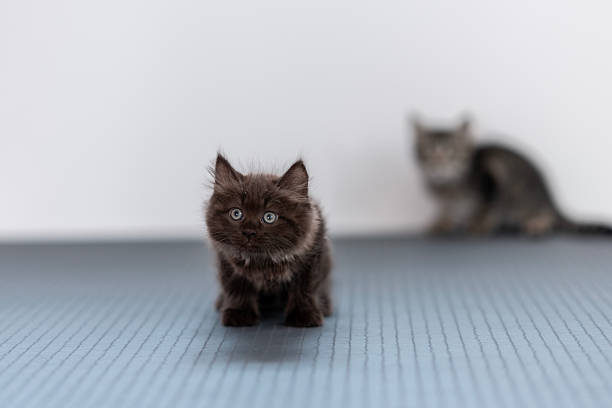
Exotic Shorthair vs American Curl: The Ultimate Breed Comparison Guide
The Origins and Historical Background
Understanding the historical context of the Exotic Shorthair and the American Curl provides crucial insights into why these breeds look and behave the way they do today. Neither breed is ancient; both are the result of specific genetic events and careful human breeding programs that began in the 20th century.
The Exotic Shorthair: A Deliberate Hybrid
The Exotic Shorthair was developed in the 1950s and 1960s when breeders secretly crossed Persians with American Shorthairs to introduce the striking silver coat color and green eyes into the Persian line. The unexpected result was a heavily boned, round-faced cat with a short, plush coat. Recognizing the appeal of a “lazy man’s Persian”—a cat with the sweet Persian face but without the intense grooming requirements—breeders formalized the Exotic Shorthair. This explains their deeply affectionate nature combined with a robust physical frame.
The American Curl: A Spontaneous Genetic Mutation
In stark contrast, the American Curl’s history begins with a single stray cat. In 1981, a stray black kitten with unusual, backward-curling ears arrived on the doorstep of Joe and Grace Ruga in Lakewood, California. Named “Shulamith,” this foundational feline possessed a spontaneous genetic mutation. Geneticists later discovered that the curling ear trait is an autosomal dominant gene, meaning only one parent needs the gene to pass it on. This unique origin story is why the American Curl breed maintains such a diverse and healthy gene pool today.

Physical Characteristics and Unique Traits
While both breeds are incredibly distinctive, their physical hallmarks lie at opposite ends of the feline spectrum. The Exotic Shorthair is defined by its facial structure and coat density, whereas the American Curl is famous for its ear cartilage and graceful body type.
In-Depth Analysis: Brachycephalic vs. Mesatocephalic
The Exotic Shorthair is a brachycephalic breed. This technical term means “short-headed,” resulting in the flat face, large round eyes, and tiny snub nose that enthusiasts adore. However, this structure compresses the nasal passages and tear ducts. Conversely, the American Curl has a modified wedge-shaped head (mesatocephalic), which provides a standard, elongated nasal passage, drastically reducing respiratory and ocular issues.
The Ear Cartilage Phenomenon
The American Curl’s ears are its defining feature. When born, Curl kittens have straight ears. Within 3 to 5 days, the ears begin to curl backward in a tight rosebud shape, gradually unfurling until they set permanently at around 16 weeks of age. The cartilage is firm to the touch, similar to a human ear, which requires careful handling to prevent damage.
| Feature | Exotic Shorthair | American Curl |
|---|---|---|
| Body Type | Cobby, heavy-boned, thick neck | Semi-foreign, elegant, moderate bone |
| Head Shape | Massive, round, brachycephalic | Modified wedge, smooth transitions |
| Ears | Small, round-tipped, tilted forward | Curled backward (90 to 180 degrees) |
| Coat | Short, dense, plush, stands away from body | Silky, flat-lying, minimal undercoat (Long/Short) |
| Weight | 10-15 lbs (males), 8-12 lbs (females) | 8-12 lbs (males), 5-8 lbs (females) |

Personality, Temperament, and Family Life
Choosing between these two breeds often comes down to lifestyle compatibility. Both are highly affectionate, but the way they express their love and expend their energy varies drastically.
The Exotic Shorthair: The Tranquil Companion
Exotic Shorthairs inherited the docile, quiet demeanor of their Persian ancestors. They are the quintessential lap cats. They prefer lounging on a soft sofa over climbing to the highest bookshelf. While they enjoy brief bursts of play, usually involving a feather wand or laser pointer, they quickly return to a state of relaxation. They are incredibly loyal, often following their favorite human from room to room like a quiet shadow.
The American Curl: The Feline Peter Pan
The American Curl is frequently referred to as the “Peter Pan” of the cat world because they rarely lose their kitten-like energy, even into old age. They are highly interactive, famously dog-like, and often enjoy playing fetch. They thrive in active households and are known to be excellent with respectful children and other pets. They demand engagement and will happily assist you with household chores by observing from a high vantage point.
Expert Advice & Pro Tips
- Pro Tip for Exotic Owners: Because of their laid-back nature, Exotic Shorthairs are prone to obesity. Implement portion control and schedule daily 10-minute interactive play sessions to keep their weight managed.
- Pro Tip for Curl Owners: Provide plenty of vertical space. American Curls love to jump and climb. A tall, sturdy cat tree is a mandatory piece of furniture for this breed.
- Handling Warning: Never force an American Curl’s ears into a different position. The rigid cartilage can easily snap, causing severe pain and permanent damage to the cat.
Care, Grooming, and Health Considerations
While the Exotic Shorthair is marketed as a low-maintenance Persian, this is a relative term. Both breeds require specific, targeted care routines to ensure long, healthy lives.
Grooming Requirements
The Exotic’s thick, plush double coat requires combing at least twice a week with a stainless steel greyhound comb to prevent the dense undercoat from matting. Additionally, their flat faces cause their eyes to weep; daily wiping with a damp cloth is required to prevent tear staining and skin fold infections. The American Curl, whether short or long-haired, has very little undercoat. This means they rarely mat and only need a weekly brushing to distribute skin oils. However, their unique ears require frequent checks and gentle cleaning to prevent wax buildup, as the curled shape can trap debris.
Veterinary and Health Checklist
- Polycystic Kidney Disease (PKD): Exotic Shorthairs are genetically predisposed to PKD. Ensure your breeder provides DNA negative testing for the parents.
- Brachycephalic Airway Syndrome: Monitor Exotics for labored breathing, especially in hot weather. Keep them in air-conditioned environments during summer months.
- Ear Canal Health: For American Curls, schedule regular veterinary checks of the ear canals to ensure no structural narrowing is causing chronic ear infections.
Frequently Asked Questions (FAQ)
- Which breed is better for a first-time cat owner?
- Both breeds are excellent for beginners due to their affectionate natures. However, the American Curl is generally considered slightly easier for first-timers because they lack the complex facial grooming and potential respiratory health issues associated with the Exotic Shorthair.
- Do American Curls suffer from hearing problems because of their ears?
- No. The genetic mutation that causes the ear to curl only affects the cartilage of the outer ear (pinna). Their internal ear structure and hearing capabilities are completely normal and unaffected.
- Can an Exotic Shorthair be left alone during the workday?
- Yes, Exotic Shorthairs are relatively independent and handle alone time well, provided they have a comfortable place to sleep. However, they deeply bond with their owners and will expect quality cuddle time upon your return.
- Are these breeds hypoallergenic?
- Neither the Exotic Shorthair nor the American Curl is hypoallergenic. They both produce the Fel d 1 protein in their saliva and skin glands, which is the primary cause of cat allergies in humans.
- What is the average lifespan of these breeds?
- With proper indoor care, high-quality nutrition, and regular veterinary checkups, both the Exotic Shorthair and the American Curl have an average lifespan of 12 to 15 years.