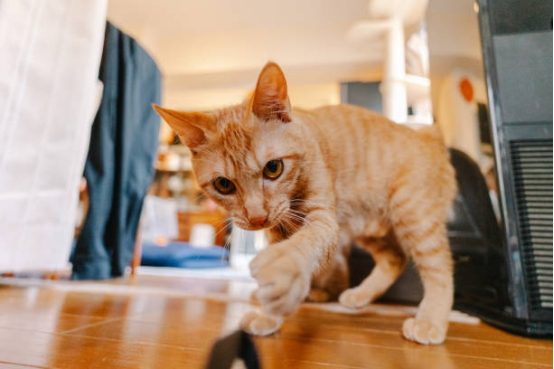
Why are we so obsessed with orange cats? Uncover the top ten secrets of orange cats
Orange cats, with their bright and warm orange fur, have become a highly recognizable fur color in the cat world. Whether on social media or in real life, orange cats have a large number of loyal fans. Their lively personalities, unique appearance, and a series of interesting behavioral characteristics make countless people love them. So, what is so special about these orange cats? Today, we will take you to learn more about the top ten secrets of orange cats and reveal the secret life behind their charming appearance.
1. The mystery of orange cats’ gender: Why are most orange cats male?
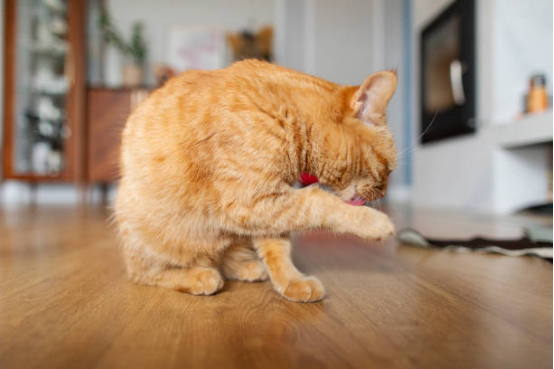
Male cats make up 80% of all orange cats, which makes many people wonder: Why are most orange cats male? Why are female orange cats so rare? The reason behind this is actually the wonderful manifestation of genetics.
The cat’s coat color gene is located on the sex chromosomes. Specifically, the orange gene is on the X chromosome. Male cats have XY sex chromosomes and only one X chromosome, so as long as this X chromosome carries the orange gene, the male cat will be orange. Female cats have two X chromosomes (XX), and they will only show orange fur when both X chromosomes carry the orange gene. This gene expression pattern results in a much lower probability of female orange cats than male orange cats.
In addition, gene mutations and the emergence of heterozygotes will also affect the color changes of orange cats. For example, calico cats with three colors are usually female cats, which is also a classic case of “sex-linked inheritance” in genetics.
This genetic principle is not only applicable to cats, but is also commonly seen in the study of sex chromosome inheritance in other animals and is a classic material in genetics education.
2. The courage of the orange cat: a natural born “street fighter”
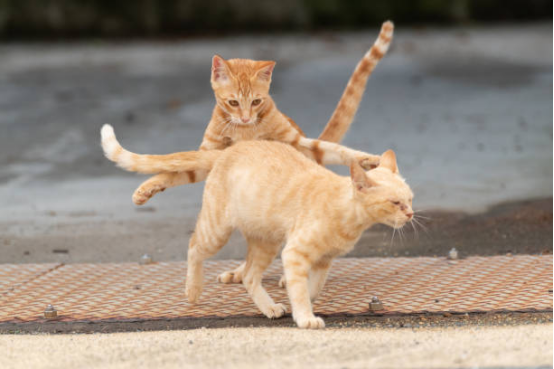
Many cat owners have found that orange cats are often bolder and more confident than other cats. Orange cats don’t like to be bullied, and when threatened, they will stand up and defend their territory without flinching.
The experience of a ginger cat owner is very vivid: once a stray cat from a neighbor’s house bullied his cat, causing the neighbor’s gray cat to hide and avoid it, but the ginger cat dared to stand up and face the opponent, and even crossed the guarding dog fence at night to enjoy its food freely. This bold and careful character makes the ginger cat look like a street bully.
This behavior is not only due to personality, but may also be related to the cat’s hormone levels and genetic tendencies. Courage and self-confidence are essential for survival in the wild, and the courage of the orange cat may be a survival advantage inherited from it.
3. Orange cats are not equal to breeds: the fur color is found in many cat breeds
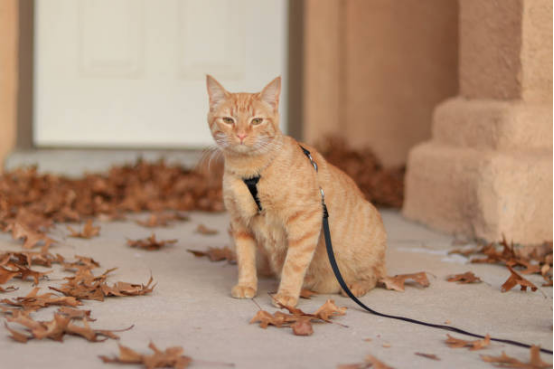
The orange cat is not actually an independent cat breed, but a coat color. Members with orange hair can be found in almost all cat breeds.
For example, British Shorthair, Munchkin (short-legged cat), Cornish Rex, Devon Rex, etc., all have representatives with orange hair. Even Persian cats and Maine Coons, which are larger cat breeds, have orange variants.
This shows that the uniqueness of orange cats does not lie in their bloodline or breed, but in their color genes that make them particularly eye-catching in the crowd.
Orange hair usually gives people a warm and friendly feeling because it contains more yellow pigment, which is also an important reason why orange cats are popular in the pet world.
4. The relationship between tabby cats and orange cats: stripes are the standard
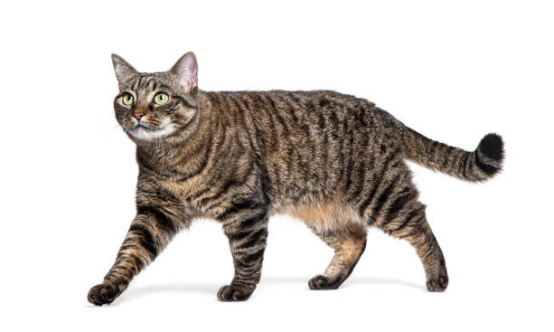
Interestingly, almost all orange cats fall into the category of tabby. This means that whether you see bright orange stripes or more subtle spots, the pattern is a manifestation of the tabby gene.
The presence of tiger stripes is a very common camouflage method among cats, which can help them hide their tracks in the wild and avoid being discovered by natural enemies.
However, not all tabby cats are orange. Tabby fur can range from gray, brown, to black, and orange is just one of many shades of it.
From a biological point of view, the existence of the tabby gene has greatly enriched the color diversity of cats, forming an interweaving of natural selection and artificial breeding.
5. The mysterious “M” on the forehead: the intersection of culture and legend
The unique “M”-shaped marking on the orange cat’s forehead is not only their symbol, but also has mysterious meaning in many cultures.
In the West, the legend of the letter “M” is widely circulated. A Christian story tells that when Jesus was a child, he fell asleep peacefully because of the company of a cat. In gratitude, God gave the cat an “M” mark on its forehead, symbolizing protection and peace.
Although this legend has no scientific basis, it reflects the emotional projection and cultural identity of humans towards cats, especially orange cats. Similar symbolic meanings exist all over the world, showing the deep connection between animals and human culture.
In modern pet culture, this “M” is also jokingly called the “cat’s crown” by cat lovers, symbolizing nobility and uniqueness.
5. Affectionate personality: Why are orange cats so clingy?
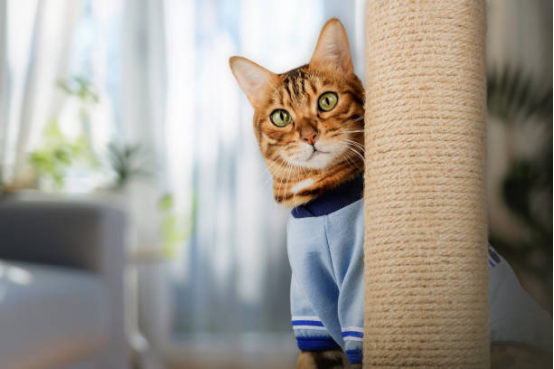
Many owners who have raised orange cats have felt that these cats are clingier and like to be close to people more than cats of other fur colors.
Orange cats often take the initiative to find people to act cute in the morning and like to hang around humans. This behavior makes many people feel warm and satisfied.
This is not only a genetic factor, the environment and early experience are also critical to the formation of a cat’s personality. A warm family environment and sufficient human care can stimulate a cat’s stronger social needs.
Psychological research points out that cats’ attachment behavior is related to their need for security. Orange cats’ clinging behavior may be their way of expressing their trust and dependence on their owners.
7. Variety of “chatter”: the rich vocal expressions of orange cats
Orange cats usually like to “talk”. They communicate with their owners with rich sounds, especially when they are hungry or need attention.
For example, they may meow loudly at first, and if the owner does not respond, the sound will gradually become aggrieved and soft, as if they are acting coquettish. In addition, orange cats can also make various sounds, such as hissing, crying for help, etc., showing rich emotions.
This rich vocal expression not only reflects the cat’s intelligence and adaptability, but also deepens the emotional connection between the cat and its owner.
Behavioral scientists believe that cats’ conversational abilities are the result of long-term domestication and interaction with humans, and that orange cats’ abilities may be more pronounced because of their extroverted personalities.
8. Milk Complex: Why do orange cats love to drink milk?
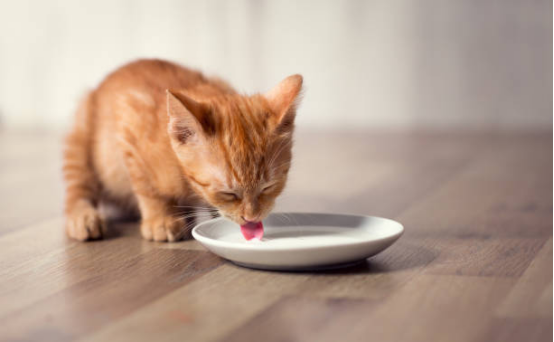
Although most cats are lactose intolerant and drinking milk can easily lead to diarrhea and gastrointestinal discomfort, orange cats are famous for their love of milk.
Many cat owners have shared that their cats at home get extremely excited every time they smell milk, and a mouthful of warm milk can keep them intoxicated for a long time.
Scientifically speaking, lactose intolerance is a common problem in cats because they lack the enzyme to break down lactose, but some cats may be more adaptable or show a special preference for milk.
Veterinarians generally recommend that if cats like to drink milk, they can choose special cat milk, or replace it with plant milk such as almond milk to avoid gastrointestinal discomfort.
9. The nature of a foodie: the appetite and health management of orange cats
Orange cats generally have big appetites, especially when they wake up in the morning, they will look for food first and will “stay in bed” if they don’t eat breakfast.
This “foodie” personality makes orange cats prone to overweight, which in turn causes obesity-related diseases such as diabetes, heart disease and arthritis.
The American Veterinary Medical Association recommends that cat owners should properly control the diet of orange cats, avoid overfeeding, and maintain moderate exercise to ensure their health and longevity.
Nutritionists also recommend a high-protein, low-carbohydrate diet to help orange cats maintain an ideal weight.
9. Diverse patterns: Four classic patterns of orange cats
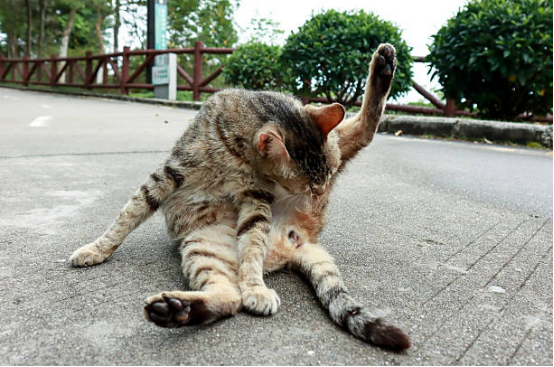
There are four main patterns of orange cats: mackerel, classic, spotted and striped.
Non-fish patterns appear as long and thin stripes, similar to fish bones; classic patterns are large and obvious spiral patterns; dot patterns have obvious spots; and stripe patterns are multiple stripes alternating.
Even if you are not a professional, you can usually identify the type of patterns of the orange cats around you by carefully observing them.
These patterns not only affect the appearance of orange cats, but are also closely related to genetic genes. Scientific research has found that different patterns may affect the adaptability and behavioral performance of cats.
The charm of orange cats is endless: What is the story of your orange cat?
Through the above ten aspects, I believe you have a deeper understanding of orange cats. From their unique genetic code, brave character, to rich vocal expressions and unique cultural symbols, orange cats are undoubtedly the stars of the cat family.
If you are also the owner of a ginger cat, you might as well share the interesting stories and personality traits of your ginger cat so that more people can get to know these warm and lovely orange elves.